Most people do these kinds of adventures in their early twenties. They backpack through Southeast Asia, “find themselves” in Bali, and somehow already know how travel insurance works.
We didn’t.
Our twenties looked very different. Life happened. We went through a lot during those years, and simply didn’t have the money to travel the way many other people did. So by the time we finally boarded a plane to Cuba in our late thirties, it honestly felt like we were making up for lost time.
Gary was the organized one. The smart one. The person who actually thought things through.
I was more the: We’ll figure it out somehow type.
And unfortunately for Gary, that became very relevant about five minutes before boarding.
Panic at Schiphol
Our trip started at Schiphol Airport in Amsterdam. We were standing near the gate when Gary suddenly looked at me and asked:
Did you bring the insurance papers?
Silence.
Now, Cuba was very strict about paperwork. You needed special insurance documents in English to enter the country, and you had to request them in advance.
Guess who forgot them?
Me.
I looked at Gary and said the only honest thing possible:
Oh… I completely forgot.
Gary stared at me for a few seconds in pure disbelief.
How do you forget something like that?
Excellent question, Gary.
Excellent question.
Then suddenly, Gary came up with what can only be described as one of the most questionable – yet strangely brilliant – travel solutions we ever had.
We both carried little yellow vaccination booklets because we had received vaccinations for hepatitis A and B. The pages were filled with official-looking stamps.
Gary held up the booklet like he had just cracked an international spy code.
We’ll just show them this.
I blinked. This is not insurance.
Yes, but look at all the stamps, he said confidently. In South American countries, they love stamps. Nobody reads English anyway. We’ll be fine.
Honestly?
It made absolutely no sense. And yet somehow… it also felt weirdly convincing.
Welcome to Havana
Fourteen hours later, we landed in Havana.
And let me tell you something: Cuban airport security in 2016 was not exactly relaxed.
I think I got checked at least ten times.
Passport checks.
Bag checks.
Questions.
More questions.
Random inspections.
Another inspection just for fun.
At some point I felt like they probably knew more about me than I knew about myself.
Then came the big moment.
The immigration officer asked for the insurance papers.
Gary calmly handed over the yellow vaccination booklet like this was a perfectly normal thing to do.
The officer opened it.
Looked at the stamps.
Flipped through the pages.
Paused dramatically.
Meanwhile, my heartbeat had reached spiritual levels.
Then he nodded.
Okay.
That was it.
We were in.
To this day, I still have no idea whether:
- he genuinely believed it,
- he didn’t care,
- or the stamps simply looked official enough.
Either way, we walked through immigration trying very hard to act normal while internally celebrating like two criminals who had just escaped an international heist movie.
Two currencies and one universal truth
Before arriving in Cuba, Gary and I had done at least some research. Not endless travel documentaries or backpacker deep-dives, just enough to realize one very important thing:
At some point, you will probably get scammed in Cuba.
Not necessarily with huge amounts of money. Usually just small tricks, confusing calculations, or mysterious “mistakes” that somehow always worked in someone else’s favor.
Enough to make you think afterward:
“Well… that felt slightly illegal.”
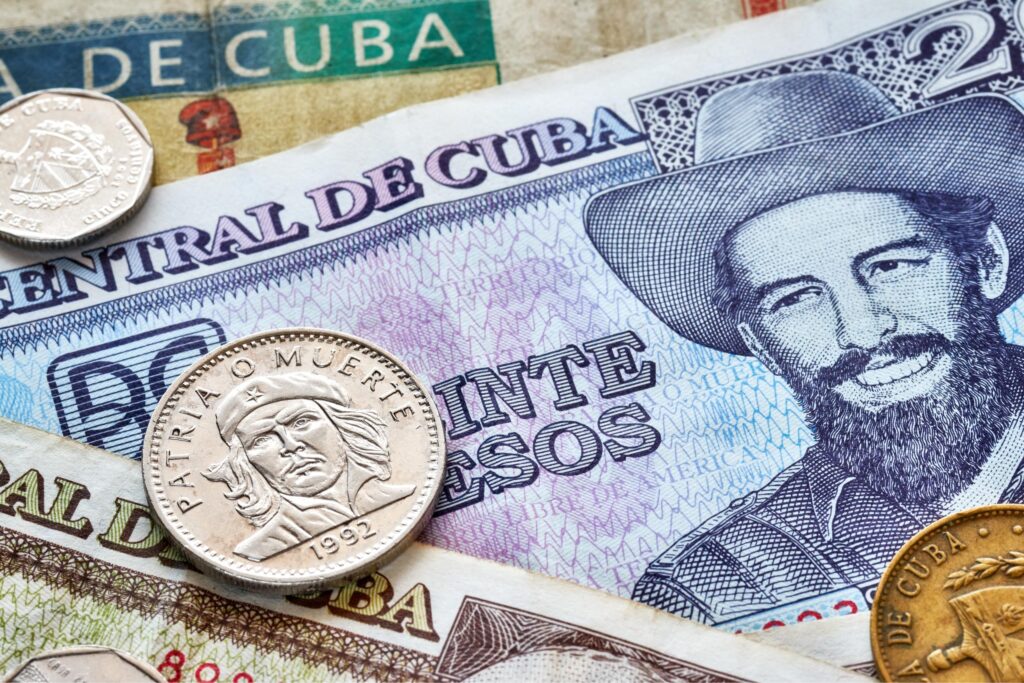
Back in 2016, Cuba still had two official currencies:
- the CUP: the Cuban Peso, mainly used by locals
- and the CUC: the Cuban Convertible Peso, mainly used by tourists
The whole system was incredibly confusing.
As tourists, we were expected to pay with CUC, not with the local CUP. Locals used CUP for everyday things, but tourists were strongly discouraged from using it. We were even told not to accept local currency in certain situations.
And no, this system no longer exists. The CUC was officially abolished on January 1st, 2021, and Cuba now mainly uses the CUP.
But in 2016? The double-currency system was still very much alive.
And complicated.
Back then, you also couldn’t simply grab your debit card and withdraw money from an ATM whenever you felt like it. Honestly, you could leave your bank card at home because it was practically useless. ATMs were extremely limited, international cards often didn’t work properly, and cash was king.
So before traveling, we had brought euros with us to exchange in Havana.
The only problem?
According to the internet, exchanging money at the airport was one of the fastest ways to mysteriously lose part of it. So we decided we would exchange our money later in the city instead.
Confidently. Without much of a plan. As usual.
And I’ll admit something else: I secretly wanted to bring a few CUC bills back home as souvenirs. But Cuba was extremely strict about its currency laws at the time, and tourists were not supposed to take CUC out of the country.
Considering I had already smuggled myself into Cuba with a fake insurance document, I decided maybe prison wasn’t the ideal ending to our vacation.
The bus from Winschoten
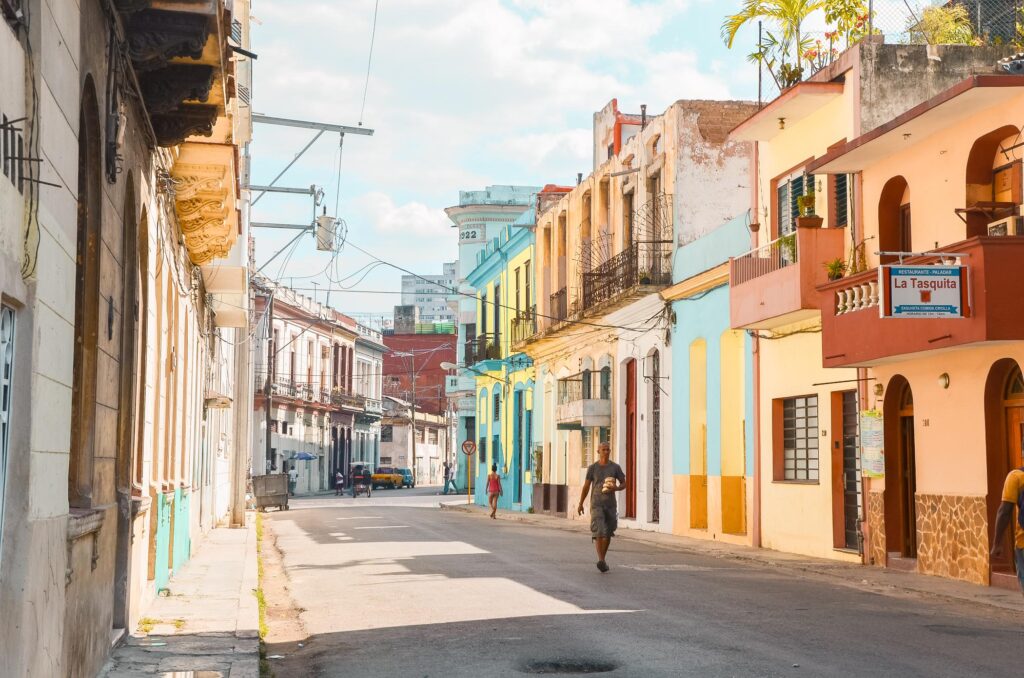
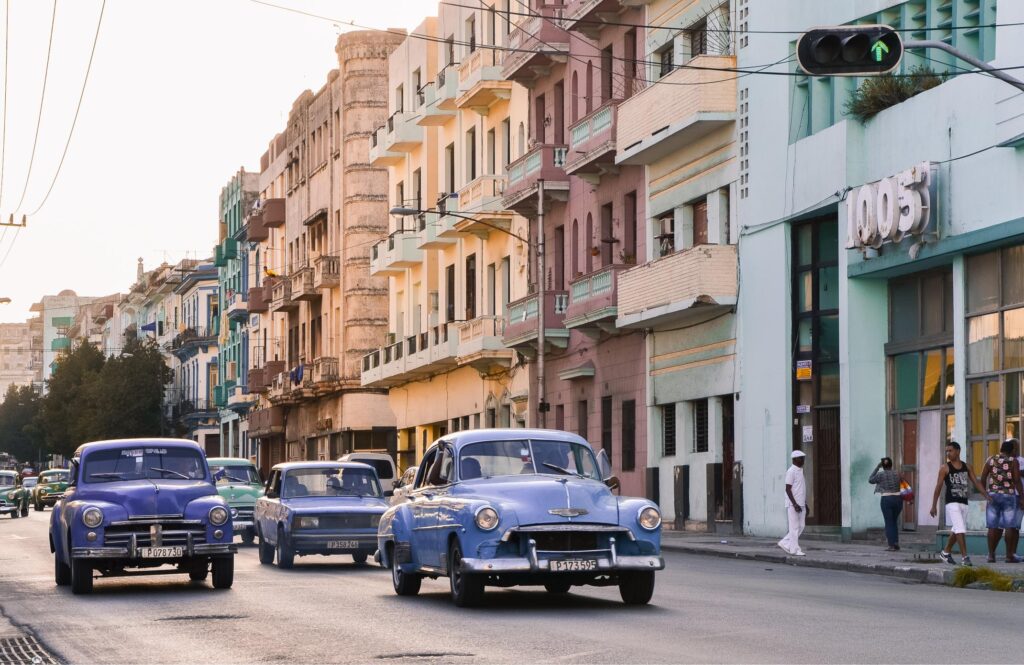
Havana itself felt surreal.
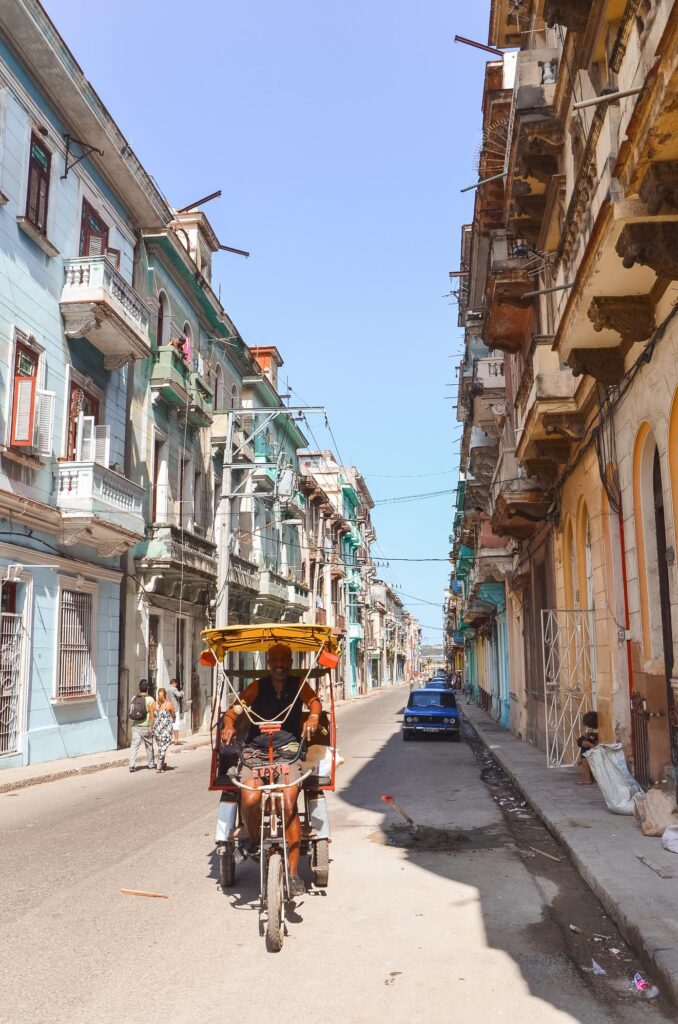
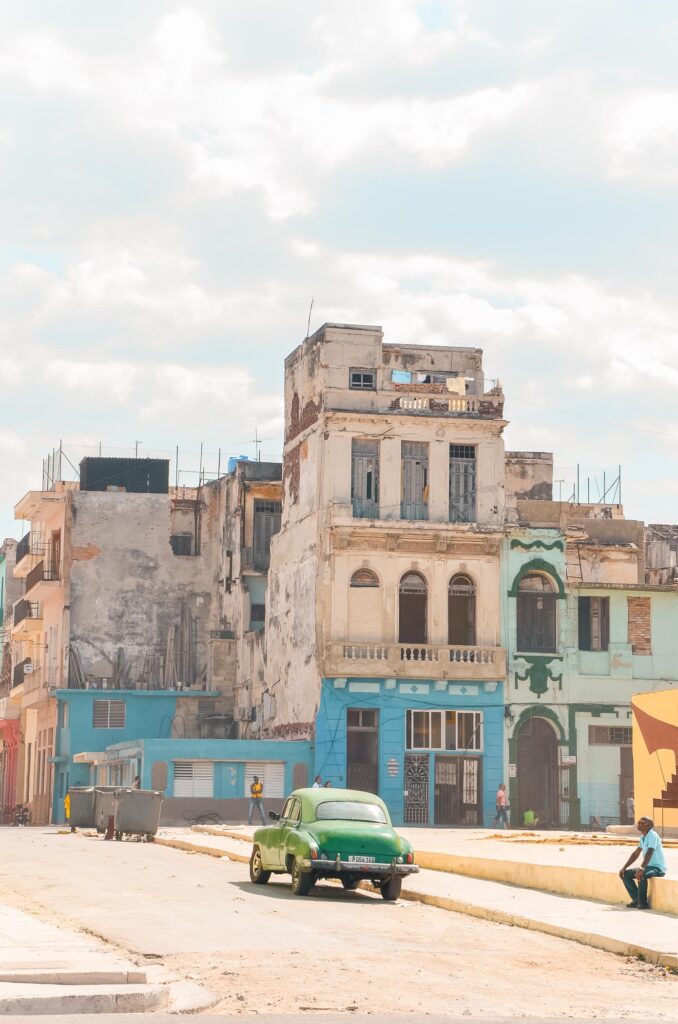
Colorful old buildings.
Classic American cars.
Music everywhere.
And no internet.
Back then, in 2016, Cuba barely had WiFi. We spent nearly two weeks completely offline. No Google Maps. No quick searches. No checking reviews. If you got lost, you simply became… more lost.
What also shocked me was how empty everything felt.
There were barely any supermarkets. Hardly any stores. Sometimes entire streets seemed frozen in time.
And then suddenly, in the middle of Havana, we saw something completely absurd.
An old yellow Gado bus with the word: Winschoten.
Now, Gary and I are from Groningen in the Netherlands, and Winschoten is a small city there. Seeing that name in Cuba felt like spotting your neighbor at the North Pole.
We started laughing immediately. Of all places on earth, we found an old Dutch bus in Havana.
The world is strange sometimes.

The Russian hotel strategy
Near our hotel stood a massive luxury hotel. Beautiful lobby. Marble floors. Air conditioning that actually worked, already suspiciously luxurious by Cuban standards. So naturally, we went inside. The moment we entered, we heard nothing but Russian. Everywhere. Russian tourists. Russian conversations. Russian energy.
Then I spotted something important near the reception desk: A woman exchanging money. I immediately turned to Gary.
Here.
He looked confused.
We exchange our money here.
Why here?
And that’s when I said something that still makes me laugh: Because if there’s one thing you don’t do, it’s scam Russians. Honestly, it felt like solid logic at the time.
And somehow… it worked. We exchanged our money and, miracle of miracles, received exactly the correct amount back.
No missing bills.
No mysterious calculations.
No “accidental” confusion.
Maybe it helped that I look slightly Eastern European myself. Who knows. But for that one glorious moment in Cuba… We had not been scammed.
Not yet.
And with our freshly exchanged tourist currency safely hidden away, our road trip through Cuba could finally begin.